

Driven by AI and New Energy as Dual Engines, High-End MLCC Industry Embraces a Structural Prosperity Cycle
01 Industry Overview: High-end MLCC Exhibits a Strong Upward Trend
Recently, the prosperity of the MLCC industry, a core segment of passive electronic components, has continued to rise, with notably pronounced structural characteristics. Data shows that high-end MLCC products have seen a maximum price increase of 35% over a period of one and a half months, achieving a remarkable market performance for this phase. Unlike the past pattern of broad-based price fluctuations across the entire industry, this cycle exhibits strong divergence: high-end computing-grade and automotive-grade MLCCs remain in tight supply with rising prices, while mid-to-low-end consumer-grade MLCCs show stable trends. This marks the industry’s official entry into a new prosperity cycle driven primarily by high-end demand.
02 Core Product Value: Fundamental and Core Components of the Electronics Industry
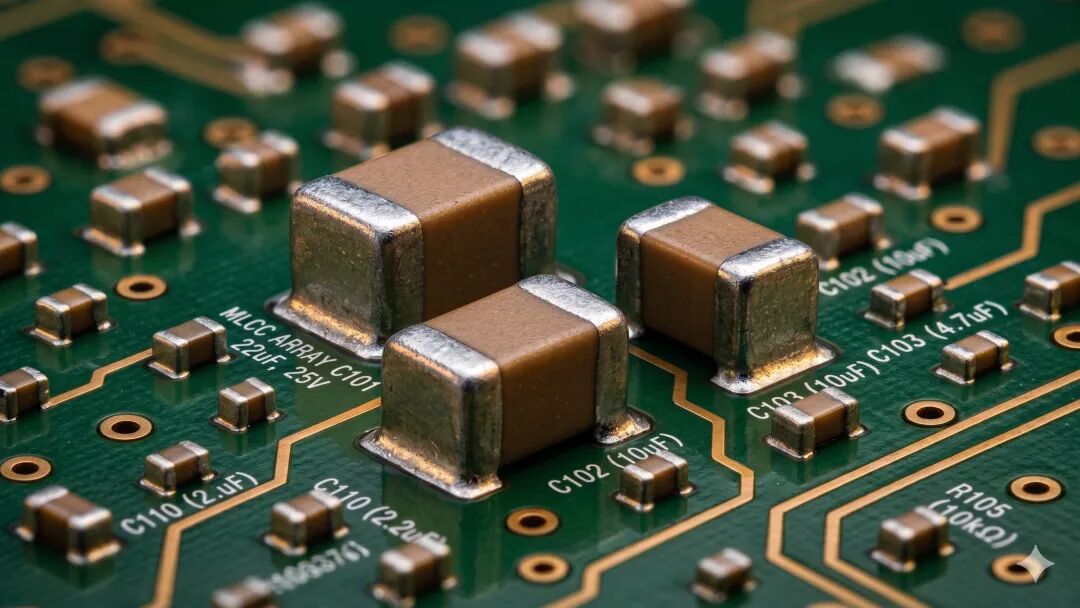
MLCC, short for Multi-layer Ceramic Capacitor and also known in the industry as the chip capacitor, is the most widely used and most versatile basic passive component in electronic equipment. Its core functions include circuit filtering, voltage regulation, and current stabilization, effectively ensuring the stable and safe operation of electronic circuits while preventing equipment failures caused by voltage fluctuations and current interference. Today, MLCCs are widely used across a full range of terminal products, including smartphones, home appliances, industrial equipment, AI servers, new energy vehicles, and intelligent driving systems. They are key core components supporting the stable operation of the modern electronics industry and the high-performance implementation of terminal devices.
03 Industry Cycle Review: From Overcapacity to Structural Supply-Demand Reversal
In 2023, the MLCC industry was generally in a downturn, characterized by overcapacity and weak demand. At that time, the global consumer electronics market was experiencing a sluggish recovery, with terminal shipments under continued pressure. Meanwhile, the high-end demand from AI servers had not yet seen a large-scale surge. Combined with the ongoing capacity release from the industry's concentrated expansion between 2021 and 2022, the mid-to-low-end MLCC segment faced severe overcapacity, leading to lower overall gross margins and a persistently depressed market. Starting in 2024, as AI computing power infrastructure materialized and the penetration rate of new energy vehicles rapidly increased, demand for high-end MLCCs began to expand quickly. By the end of 2025, a clear supply-demand gap had emerged in the high-end MLCC segment, while low-end products continued to suffer from overcapacity. This marked the formal establishment of a structural divergence pattern within the industry.
04 Demand Surge Across the Board: AI and New Energy as Dual Powerful Enablers
The core driving force behind the current upward cycle of the MLCC industry stems from the simultaneous boom in two major high-end tracks: AI computing power and new energy vehicles. In the computing power sector, a single AI server requires up to 10 times the amount of high-end MLCCs compared to a standard server, and 30 times that of a smartphone — a demand increment far exceeding that of other core AI components such as PCBs and memory chips. In the new energy sector, the total MLCC usage in a new energy vehicle is more than three times that of a traditional fuel vehicle. For high-end intelligent driving models, the demand for high-precision, high-stability, high-end MLCCs has grown even more dramatically. Industry calculations show that the global demand for MLCCs will increase by nearly 90% in 2026, and is expected to nearly double again by 2027, indicating persistently strong growth momentum.
05 Prominent Supply-Side Barriers: Widening Gap in High-End Capacity Shortage
Compared to the explosive growth in high-end demand, the supply side of the MLCC market faces strong rigid constraints that prevent it from quickly matching the incremental market demand. High-end computing-grade and automotive-grade MLCCs involve complex manufacturing processes, require high formulation precision, pose great difficulties in yield rate control, and thus present extremely high technical barriers. Moreover, the construction of high-end MLCC production lines, equipment commissioning, and capacity ramping typically take around two years, making it impossible to rapidly expand production and fill the supply gap in the short term. Currently, the delivery lead time for high-end MLCCs in the industry has stabilized at around six months. Leading manufacturers are prioritizing high-margin, high-end capacity expansion while underinvesting in consumer-grade MLCC production, further exacerbating the supply-demand gap in the high-end market.
06 Market Competition Landscape: Foreign Monopoly, Domestic Players Accelerating Breakthrough
For a long time, the global MLCC market has been characterized by a highly oligopolistic landscape. Leading Japanese and South Korean companies, leveraging years of technological accumulation, mature process systems, and large-scale production capacity, have captured over 60% of the global market share. Their dominance is particularly pronounced in high-end computing and automotive-grade MLCCs. In contrast, traditional Chinese MLCC manufacturers initially focused on the low-to-mid-end consumer electronics segments with relatively low technological barriers, accounting for less than 10% of the global market. However, with the comprehensive upgrade of China's electronics industry, domestic manufacturers have persistently tackled core technologies, achieving breakthroughs in high-end MLCCs. A number of products have successfully passed certifications from leading terminal manufacturers, gradually enabling large-scale production and substitution capabilities. As a result, the pace of domestic substitution continues to accelerate.
07 Industry Cycle Characteristics: Showing Clear Structural Divergence
The MLCC industry has now completely moved away from the traditional cycle of broad-based rises and falls, entering a phase of extreme structural differentiation. On one hand, driven by the surge in AI computing power and the intelligent upgrade of new energy vehicles, rigid demand for high-end MLCCs continues to expand, with supply-demand remaining persistently tight. This has ushered in a once-in-a-decade super cycle, characterized by rising product prices and significantly expanded profit margins for manufacturers. On the other hand, the recovery of demand in the consumer electronics market has fallen short of expectations. Coupled with excess low-end capacity and price volatility of storage components, the mid-to-low-end MLCC market sees stable demand and stable prices, with no significant fluctuations. Overall, the core growth of the industry is entirely concentrated in the high-end segment.
08 Industry Future Outlook: Short-term Prosperity to Continue, Cyclical Turning Point in 2027
In terms of short-term trends, the technological barriers and capacity cycles of high-end MLCCs make it difficult to quickly close the supply-demand gap, so the industry's high prosperity and strong price increases will continue. From a long-term cyclical perspective, the MLCC industry has an inherent cyclical fluctuation pattern of every 2–3 years. The window for the concentrated release of new high-end capacity from leading overseas manufacturers is expected to be in the second half of 2027. By then, the supply-demand dynamics in the industry will gradually ease, and the current upcycle may reach a turning point. Meanwhile, 2027 also marks a concentrated cyclical turning point for several sub-sectors across the AI industrial chain, with highly aligned market expectations. As a result, the turning point of this MLCC upcycle may materialize earlier than expected.
09 Industry Summary and Outlook: High-End Orientation and Domestic Substitution as Core Trends
Overall, the current market trend of the MLCC industry is not a short-term speculation. Instead, it represents a structural industrial transformation driven by the upgrading of AI computing power and the new energy sector, shaped by evolving demand, technical barriers and production capacity cycles.
Going forward, as artificial intelligence, intelligent connected vehicles and high-end smart manufacturing continue to gain traction, high-end and high-reliability MLCCs will remain in sustained short supply, making this a promising long-term track. Domestic electronic component enterprises will keep focusing on high-end segments, break through core technical bottlenecks and expand production capacity for premium products. They will also accelerate import substitution, driving the high-quality development of China's passive component industry toward high-end positioning, refined production and full localization.
About Us
Our company focuses on the R&D and sales of high-end electronic components, deeply cultivating core passive component sectors such as MLCC. We target high-precision application fields including computing power, new energy, and industrial control, continuously breaking through technical barriers. With high-quality products and reliable delivery capabilities, we empower upstream and downstream supply chains, contributing to the localization and high-end upgrading of the electronics industry.


 Whatsapp
 Email
Email Skype
Skype