

The AI Era’s Most Overlooked Strategic Resource: MLCC
1. Basic Definition and Core Positioning of MLCC
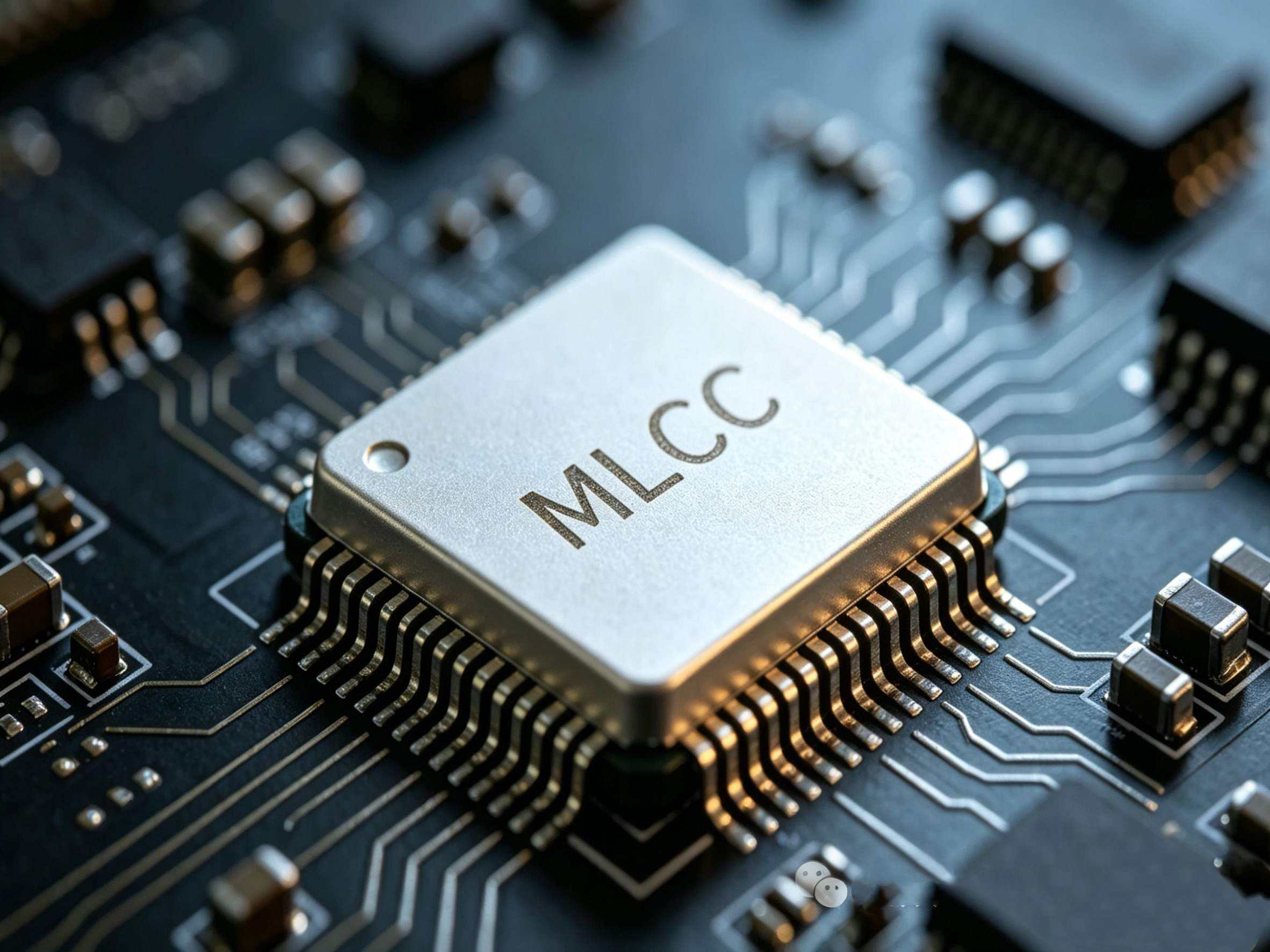
MLCC, full name Multilayer Ceramic Chip Capacitor, also known as a monolithic capacitor, is a fundamental electronic component made by staggered stacking of ceramic dielectric sheets, high-temperature sintering, and then encapsulating electrodes. Its working principle is based on the physical characteristics of capacitors, featuring the ability to pass alternating current (AC) while blocking direct current (DC). Its core functions include filtering, decoupling, energy storage, and voltage stabilization, ensuring the stable operation of electronic circuits.
MLCC is hailed as the "rice of the electronics industry" and is an essential core component for the electronics sector. With its tiny size, wide operating temperature range, high reliability, and outstanding cost performance, it is the most widely used chip component in the world, accounting for over 90% of the ceramic capacitor market and nearly half of the overall capacitor market. Almost all electronic devices with circuit boards rely on MLCCs, covering a full range of applications: a single smartphone uses over 1,000 MLCCs, a pure electric vehicle uses between 18,000 and 30,000 units, and a single high-end AI server uses more than 440,000 MLCCs.
2. The Complete MLCC Industry Chain
The MLCC industry chain consists of three major segments: upstream core materials, midstream precision manufacturing, and downstream end-use applications. Each segment differs significantly in terms of barriers and competitive landscape.
1. Upstream: Core Materials (Key Challenge for Domestic Substitution)
Ceramic powder is the core raw material for MLCCs, directly determining the product's size, capacitance, and stability. In high-end, high-capacitance MLCCs, the cost of ceramic powder accounts for over 35%. Currently, high-grade nano-barium titanate powder is monopolized by Japanese and American companies. Only a few domestic companies in China have achieved technological breakthroughs, with Sinocera (Shandong Sinocera Functional Material Co., Ltd.) being the second company in the world to achieve mass production of the relevant powder. Electrode materials, on the other hand, are largely self-sufficient within China.
2. Midstream: Precision Manufacturing (Technology and Capital Intensive)
MLCC production requires more than ten precision processes, with hundreds of layers of micron-thick ceramic dielectric films and electrodes stacked internally. The core barriers in the industry lie in three major technologies: thinning, high-low temperature co-firing, and yield control. The industry landscape is clearly segmented: leading companies dominate the high-end automotive-grade, high-capacitance, and miniature MLCC markets, while small and medium-sized manufacturers crowd into the low-end consumer-grade market, competing mainly on price.
3. Downstream: Iterative Upgrading of Demand Structure
Traditional demand is primarily from mobile communications, computers, consumer appliances, and industrial automation. Currently, the industry's demand structure is being reshaped by two major tracks: AI computing power and new energy vehicles (NEVs), which have become the core growth drivers.
3. Global Market Competitive Landscape
The global MLCC market presents a clear tiered differentiation, with Japanese and Korean companies monopolizing the high-end market while domestic Chinese manufacturers are accelerating their breakthrough efforts. The overall landscape follows a pyramid structure:
First Tier (Japanese Oligopolies): Murata, Samsung Electro-Mechanics, Taiyo Yuden, TDK, and Kyocera hold the majority of the global high-end market share. Among them, Murata accounts for 31.8% and Samsung Electro-Mechanics for 22.9%. Together, they dominate the AI server and high-end automotive-grade MLCC markets, with extremely high technical barriers.


 Whatsapp
 Email
Email Skype
Skype